|
|
|

|
Chapter 6.1 Zoos
Most zoos are small insignificant collections of animals in towns or by roadsides or in people's private backyards. A 'zoo' is simply a collection of animals. Most zoos are geared to make money by attracting paying visitors. They give trivial thought to animal welfare and none to animal rights. The quality of life for their animals varies from lethal to scarcely adequate. The earliest significant animal collections date back at least 3,500 years to the Middle East. The animals came from faraway places and were objects of curiosity. The animals were given to rulers, the rich and the powerful in return for political favours and the animals' new owners used their collections as displays of status. Enthusiasts with a passion for collecting animals started the first big zoos as we know them today. They trapped animals from the wild and sometimes killed mother animals to take their young. Young animals are easier to keep and transport because they eat less, take up little room and are more manageable than adults. The animal catchers killed animals who got in their way and many of the animals they trapped died on the long journey to the zoo. There is a zoo in many large cities today and the bigger the zoo the prouder the citizens. Among the first major city zoos were Vienna, founded in 1752, and Paris, founded about 40 years later. London Zoo, founded in 1828, claims to be the world's first zoo for the study of animals. Later in the nineteenth century Philadelphia and Adelaide zoos were set up in the US and Australia.  Zoo Statistics Zoo Statistics
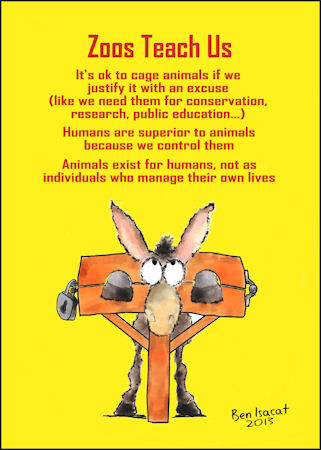
Changing Attitude to ZoosThe people who collected animals for zoos treated their charges as items or specimens, especially treasured if rare or unusual, and prized as public attractions. But the animals themselves typically lived in small bare cages with nothing to do and no place to retreat from human gaze or disturbance. Leading and distinguished zoos set a trend from the 1950's as popular attractions to entertain the public. However, in the 1970's people's attitudes really started to change. A few people began expounding the view that animals have mental and physical needs that their inadequate living conditions cannot support. One charity, Zoo Check, was especially prominent. Critics of zoos made animal welfare an issue and consequently zoos began to be forced to justify their existence to the public. Basic Arguments for ZoosZoos today justify their existence in four ways: 1. Scientific Research Zoos contribute substantially to scientific knowledge by researching animals living at the zoo. 2. Nature Conservation Zoos play a key role saving species from extinction by breeding endangered animals and returning them to the wild. 3. Public Education Zoo exhibits are a valuable source for the public to learn about animals and their natural habitat. 4. Public Entertainment Zoos offer entertainment and recreation for the public. Zoos cannot rely entirely on grants and public donations, so they must earn their way and charge fees like any other business. So what arguments do zoo critics muster against these assertions? Arguments Against Zoos1. Scientific Research Few zoos finance research that may benefit their animal occupants and by far the majority of zoos have neither the means nor the will to carry out research. Nor is research necessarily always significant and worthwhile in the few zoos that do it and their research can be misleading. For example, zoo animals make unreliable subjects for behavioural research. Their living conditions are artificial and many zoo animals are mentally deranged (more below). We now know from field studies on wild-living animals, like wolves and chimpanzees, that the social organisation of animals in the wild where humans least disturb them are completely different from their zoo counterparts. 2. Nature Conservation There is no space or money in zoos to accommodate and look after even a tiny fraction of the many and growing numbers of endangered species. Zoos have reintroduced successfully only a handful of animals back to the wild. Notable successes are the golden lion tamarin to the rain forest in Brazil, the Arabian oryx to the deserts of Arabia, the tarpan (Przewalski horse) to the Mongolian steppes and the field cricket to Britain. These exceptions, although important, do not justify the captivity of a million other animals at zoos. Even if a zoo wants to return animals to their wild environment, it is increasing not possible to do so because people destroy or seriously degrade natural habitats. A priority for conservation is to conserve animals in their natural habitat by conserving whole ecosystems, yet few zoos support in situ conservation projects. 3. Public Education Throngs of people visit zoos. So the potential is there to educate people about animals, their rights, welfare and conservation. Some zoos fix up information plaques or recorded talks next to exhibits, and a few of the big zoos supply videos and publications. However, even at the small number of zoos where good educational material is available, you can see that the public absorbs little of it and most zoo-goers disregard it. Zoo animals cannot possibly act genuinely in their enclosures and may even be psychotic (more below). Unnaturally housed or insane animals cannot be representative of their species. The zoo-going public learn only what cowed, mad or withdrawn animals are like and that it is normal and acceptable that humans should control animals. 4. Public Entertainment There were virtually no televisions in the 1950's when people flocked to the big zoos, but good wildlife television programmes today can show normal behaviour of animals in their natural surrounds. And many people today go on safari or working holidays in wild animal habitat to experience nature in the flesh. We do not need to confine animals in zoos to learn about them or be entertained by them. Zoo animals are not necessary as educators or entertainers of the public. Conclusion What do zoos really teach people? Zoos teach people at least three things:
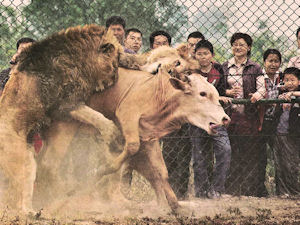
What Zoos Won't Tell YouZoo animals live in conditions where outlets for their natural instincts are continually frustrated. Lack of adequate environment may not be a mental or emotional problem for invertebrates, like giant stag beetles and tarantula spiders. But it is a serious problem for animals like wolves, bears and eagles. How can animals who normally run or fly great distances express their urges when confined in enclosures? Animals in zoos usually have nothing to do. They have no tasks to exercise their intelligence or other skills. Animals can be bored, depressed and listless. In short, zoo animals become institutionalised, helplessly dependent on humans. In their restricted zoo-world many animals succumb to ailing mental health and go mad. It is easy to see animals with unnatural behaviour in zoos. You can see self-mutilation, such as tail chewing or excessive plucking out of fur or feathers, see listless indifference, and see abnormal repetitive behaviours (stereotypies) like pacing up and down or rocking back and forth for ages. Some animals go mad in zoos. These behaviours indicate neurosis or insanity brought on by boredom, deprivation, frustration and stress. The animals are telling us they are suffering from inadequate lives - even though they may look physically healthy, well fed, clean and otherwise cared for. Humans in mental homes express the same kind of behaviour, but mental health problems in zoo animals usually go unnoticed by the passing public. 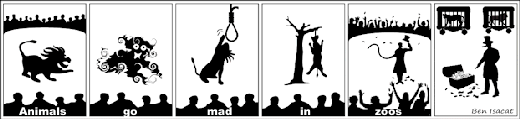 Zoos encourage the (often illegal) trade in animals and endangered species through stocking zoos with wild-caught animals. Where do old and surplus zoo animals go? For some zoos the temptation is to sell animals they do not want to practices like the exotic meat industry, such as bushmeat or canned hunts. Animals in zoos in war zones may stave slowly to death in their cages through neglect because no one can care for them. Deliberately condemning animals to death like this is abuse and an abandonment of moral consideration. Locking up animals encourages indifference and lack of respect for animal life. Zoos teach people that it is all right to use animals, even for purposes we assume are virtuous (education and conservation). Zoos inspire people with false ideas by inadvertently teaching them that humans are superior to animals, physically dominant over them, and that it is proper for humans to live emotionally, spiritually and intellectually apart from nature and not as part of it. All in all, humans use zoo animals as a means to further human ends, in particular for the conservation of species for human posterity, research for human knowledge, education for human betterment, and for the pursuit of earning a living. Conservation, research, education and employment are noble ideals, but if you believe that animals should have rights then zoos are a raw deal. For & Against: argue your case1. Research
|
|