|
|
|

|
Chapter 6 Numbers of Animals in Biomedical Research or Experimental or Laboratory Animal Statistics
 Summary
Reliability of Estimates Estimates for the numbers of animals used in biomedical research are rough because some countries keep incomplete or no records. The United States for example does not count certain animals, such as the much used rats and mice. Britain may keep more reliable and detailed data than any other country on numbers, species and the purpose experimental animals are put to and some of these details are summarised below. Britain is said to have the most stringent laws concerning laboratory animals. However, this strength is only relative to other countries. 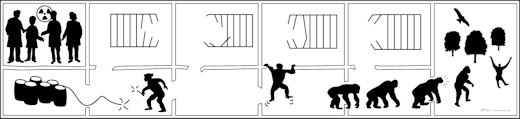 Click to go to silhouettes.  Numbers of Animals Used in Biomedical Research. True and reliable numbers of animals used for experimental purposes in biomedical research are difficult to find or do not exist. Estimates from various sources range between 40 million and 100 million animals. Statistics show that the six countries using the largest numbers of experimental animals are Japan, United States, Britain, Canada, France and Germany. Combined they might use around about half the experimental animals worldwide. China would is one of the big players, �...using lab animals�in scientific research - 16 million a year, compared to 12 million in the 25 European Union countries in 2005�� (Analysis of Current Laboratory Animal Science Policies and Administration in China. Qi Kong & Chuan Qin. ILAR e-Journal, 51:2010).
Number and Kind of Experimental Animals in Britain Britain records possibly the most detailed inventory of experimental animals, and thus is a good example of a country's population of biomedical research animals. Table 2 shows that nearly four million animals are used annually as experimental animals, up by well over a million animals from ten years earlier. The vast majority of experimental animals are rodents, then fish and birds. About three per cent - but nevertheless something like 80,000 - are other mammals.
Number of Procedures on Animals in Britain This table shows the annual number of procedures by primary purpose, a procedure being a single experiment on one animal (the same animal can be used more than once, of course). Experimenters in Britain annually carry out around four million procedures on animals. Toxicity testing is for protecting humans from potentially harmful chemicals, for instance eye and skin irritants and finding out a substance's concentration that causes death.
›› To Entries & Home |
||||||||||||||||||||||||||||||||||||||||||||||||||||||||||||||||||||||||||||||||||||||||||||||||||||||||||||||||||||||||||