Chapter 6

Animal Statistics

Here are estimates of the numbers of animals people eat, wear and experiment on worldwide. This is a limited selection because the kind of animals people use and their numbers people kill are vast and estimates are not always available. Click the sub-headings for details and more information.
Estimates of Some of the Consumption by Humans
of Animals Annually Worldwide |
| |
Annual Worldwide Mass or Number |
| Meat Consumption |
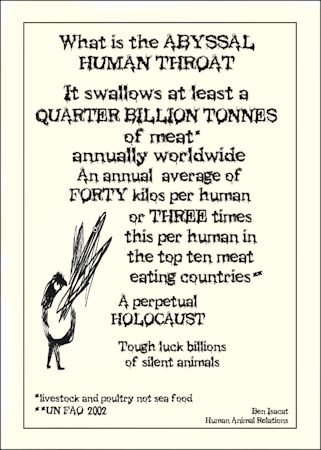
250,000,000 tonnes
40 kg per human |
| Chickens |
50,000,000,000 |
| Pigs |
1,200,000,000 |
| Sheep & Goats |
500,000,000 |
| Beef Cattle |
300,000,000 |
| Fish |
132,000,000 tonnes |
| Fur-bearers |
Farmed mink: 30,000,000+
Farmed fox: 5,000,000+
Wild fur-bearers: millions |
| Experimental Animals |
41,000,000 to 100,000,000 |
Interpreting Statistics
Statistics always need interpreting with care. If you are not wary you may easily make mistakes and get a distorted view of what you are trying to find out, as the following two problems show.
- Total Counts vs Spot Counts
- When interpreting animal statistics ask yourself whether they are about all the animals alive in the year or a count of all the animals alive on just one day of the year (for instance on 1st of January or 30th June). The latter kind of count is sometimes called a �spot count� and often yields far fewer numbers. Sources of statistics do not always make clear which kind of figure they are using.
- Commercially Viable Numbers vs Absolute Numbers
- Bear in mind when reading animal statistics whether they include only commercially viable adult animals or all animals - living and dead, young and old. A good example of this is chicken statistics. Half the number of egg-laying chickens is not recorded on official statistics because male chicks are eliminated soon after hatching (they are minced up to make fertiliser and pet food). To get the real number of chickens in the egg-laying industry (as opposed to just egg-laying hens) you must double the number to include the missing thrown-out males.
›› To Entries & Home