|
|
|
|
|
Chapter 4  Aerial Snooper 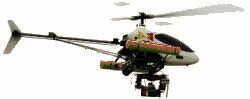 What is an Aerial Snooper? How can you monitor sport hunters, check for illegal poachers or observe animal abuse in inaccessible or prohibited outdoor areas? You can be an aerial snooper - an aerial surveillance photographer - by recording pictures and video looking down from the air via a miniature remote controlled helicopter. Remote low altitude aerial photography is a new and expanding enterprise. People remotely-fly fixed wing and rotary machines for a number of purposes: they take marketable pictures of real estate, make surveys of archaeological sites and construction projects, get aerial views of wildlife and nature, and the military use remote controlled small model aircraft for reconnaissance of hostile positions. As an aerial snooper you could find out and record evidence of what people are doing to animals just out of your reach where you cannot see them, such as looking down on a hunt, a baiting of animals, an abattoir or factory farm. Flying models (top picture) are about 60 to 100 cm long (two to three feet) and weigh around five kilograms (eleven pounds). You could design and build your own model but you will find it a lot easier to buy one of the many helicopter kits for assembly at home. You can assemble a helicopter from a kit moderately easily. Assembly takes five to twenty or so hours and you do not need any specialist knowledge or tools. A helicopter kit could cost you upward from about $200. But add to this the cost of cameras and miscellaneous items. Flying Your Helicopter The helicopter flying team consists of two members: the pilot and the camera operator, who keep their feet on the ground of course. The pilot remotely controls the aircraft. The camera operator, standing next to him, is responsible for taking pictures. Their jobs are separate because helicopters, even model ones, are not as easy to fly as fixed wing aircraft. The helicopter pilot must concentrate all the time on keeping his craft in the air by manipulating the controls: aileron for rolling, elevator for pitching, rudder for yawing, and throttle for speed. Controlling a helicopter takes patience and skill, whether you are piloting a full-scale one that you can sit in or a model you can tuck under your arm. You have to make the aircraft hover, fly up and down and go forward and backwards. Flight endurance of model helicopters is about 30 minutes and you need a clear patch of about four square metres to take off and land. The camera operator controls the helicopter�s camera: where it points, the mode it is in and what it records. The camera, either video or stills, is attached to the front or the underside of the model (top picture). It transmits images of everything it sees, displaying them on a monitor for the camera operator to save if useful and store on CD. Which Model Aircraft? Some model helicopters, just like the full scale people-carrying versions, have aerobatics capabilities (like a jet fighter). But you will want a helicopter that is a stable platform (more like an airliner) for taking pictures without blurring images. The more equipment your helicopter carries, and the more windy and adverse weather prone your area is, the heavier your helicopter should be for strength and stability. Model helicopters fly with two-stroke motors or even jet turbines, but these are noisy. You may want your aerial camera to prowl about the sky silently and in this case an electric motor is the quietest form of powered flight. For animal rights work a helicopter may be better than a fixed wing aircraft. With a helicopter the camera operator is able to monitor what is happening below and behind the craft as it hovers, flies backwards and turns in its own length. However, if you need to cover a lot of ground quickly, rather than observe a small patch for a while, then swap your model rotary aircraft for a model fixed wing aircraft. The Law Flying scaled down aircraft is a serious business regulated by law and you should find out what the law in your country says about flying model helicopters. In the United States, for example, the Federal Aviation Administration restricts flying model helicopters to below 130 metres (400 feet), no handicap for an aerial snooper. And the Civil Aviation Authority in Britain reminds you that when flying your helicopter you must be careful to carry out pre-flight safety checks, always keep your craft a safe distance from people, vehicles and structures, and only fly it in suitable weather. Pitfalls? Possibly the greatest drawback when flying a model helicopter is that you cannot let the machine out of your sight, otherwise you do not know which way it is facing or even whether it is upside down or not. Monitors may develop some day to the point where you can track your aerial snooper remotely wherever it flies. Until then you cannot spy behind hills and other blind spots where you cannot see your helicopter. If you do need to fly over obscure terrain then consider getting a paramotor and going up in person (see Flyer, Chapter 4). To help you on your way there are web sites where you can contact other model aircraft flyers to learn from each other (a good site is www.runryder.com). ›› To Entries & Home |