Chapter 4

Be a Speaker for Animal Rights

As an animal activist you may be called some day to speak for animals. In any case, you might wish to give talks about animal rights to schools and community groups, professional associations and to any society that wants an interesting speaker at their meeting. There is plenty of scope in animal rights activism for you to be an independent speaker. Alternatively, you could speak on behalf of an animal rights organisation. Some organisations even give you training. Once you get into your stride you may find that you are a naturally gifted public speaker and that giving talks is a bracing and worthwhile craft.
Titles for Talks
As a public speaker you could ask patrons whether they would like you to tailor a talk to their particular activities. You may also want to develop a few talks on specific stock-in-trade titles. Your own titles for talks could be something like:
- What are rights and what do people gain from animal rights?
- Is animal rights based on inane thinking or critical reasoning?
- Is vegetarianism immoral?
- Why has philosophy from ancient times to the Renaissance condemned animals?
- Are animal rightists anti-human?
- Is factory farming moral farming?
- What is animal testing and is it good for people?
- Why promote animal rights?
- How does the property status of animals affect animals?
- Is wearing fur good for us?
Shaping the titles of your talks in the form of a question, like the ones above, will help you focus on what exactly to speak about and will give your talks a direction. By posing a question you give your audience an augment with a conclusion that may be controversial and that they can agree with or dispute. It makes your talk more interesting than merely describing a situation or rolling out a list of facts with no clear finale. So begin your talk with a question and end it with a conclusive answer. Do not just tell your listeners but convince your listeners of the rightness of your case.
What You Need to Be a Speaker
You will need certain personal qualities for giving talks to audiences. You should:
- Enjoy speaking in front of a group of people.
- Have a good knowledge of animal rights issues and/or specialist knowledge in your particular field of animal rights.
- Have good presentation skills.
- Be able to empathise with diverse kinds of audiences.
- Have the ability to deal with questions from your audiences.
Should you think you do not have these qualities then you may be able to develop them. While some people are naturally accomplished speakers, the art of public speaking can be learned and improved with experience and there are many clubs, books, web sites and courses on the subject. The key requirements are enthusiasm, persistence and - preparation.
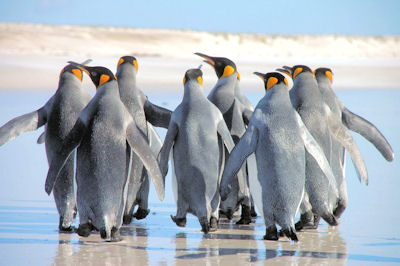
Don't let your audience get away. Capture their attention. (Photo: Ben Tubby / Wikimedia Commons). |
Preparation
You must plan your presentation to carry it through effectively; you cannot just turn up hoping for the best. (A presentation is a talk plus anything else that goes with it, such as showing a video or hosting a question and answer session at the end of your talk.)
Depending on who you are addressing, talks could last 15 - 20 minutes for school children or 30 - 45 minutes for adults. It is useful to bear in mind that the more you pack in to your talk the more your listeners will forget, even by the time they walk out the door. Your most important point might simply be to make a good overall impression and you do not need to prattle on overly long to achieve that.
At the composition stage of writing your talk think about the characteristics of your audience. What is their age group? How much might they already know about animal rights? And whether they might be inclined for or against rights? A class of young school children, a meeting of farmers or medical students pose different challenges. Seeing things from their perspective will help you prepare.
Research the topic for your talk, use reliable sources of information and look out for specific illustrations that strengthen your argument. What about displaying statistics? Detail will probably bore your audience and they will forget it quicker than you can spill it out. Instead, they will remember best an understandable, clear and striking visual graphic. For example, when talking about vegetarianism or factory farming you could display a very basic diagram of the annual number of animals people consume against the increasing human population. Draw everything simple - and extra big so that people at the back of a hall can see clearly.
Anticipate questions that your listeners might ask at the end of your talk and devise reasonable and impartial answers. Finding good answers to potential questions will further your understanding of your subject. Your knowledge will also help keep you calm and unflustered during your talks because you know you will be able to cope with questions. Your confidence will enhance your credibility with your audience as well as the standing of animal rights with them.
Learn a talk as thoroughly as you can. Knowing it back to front will fortify your composure when presenting it. It is said that Winston Churchill spent one hour rehearsing important speeches for every minute he spent delivering them. This will be too much of a chore for most speakers. But try to deliver without reading from notes, although an occasional glance is in order to remind you of major points and changes in direction. Give most of your attention to the audience.
Presentational Tips
- Arrive early and chat with some of the audience. Get to know them a little. It will help improve your nerves and limber you up. Speaking to people you have met and spoken to can be easier than addressing an audience of complete strangers.
- Make sure any equipment you use, like visual aids, works properly. While checking equipment go over in your mind the important points you are going to make and imagine delivering your opening remarks.
- The ultimate aim of your talk is to change or strengthen the attitude of members of your audience in favour of animal rights. So speak from your heart and try to inspire your audience without putting on an overblown act.
- Concentrate everything on getting your key message (one or two points) across to the audience. That is the reason for giving your talk.
- Do not be alarmed if you see blank faces. Do not waffle on but interact with your audience. Ask if they understood what you have just been going over and restate or rephrase again if necessary.
- Strive to grab your listeners� attention by enlivening your subject. One formula is to develop a dialogue; look at individuals and ask them rhetorical questions, like �What do you think happened?� or �How would you react if...?�
- Displaying graphics will provide added interest to your talk. They can act as prompts for points you wish to make.
- Keep an eye on the clock and do not ramble on past your allotted time or you will risk annoying people.
- Leave time for a discussion or a question-and-answer session at the end of your talk.
- Answer questions fully and with respect, irrespective of whether you think the questioner is hostile or stupid. You could also encourage questions throughout your talk.
- Someone asks you a question and you are stumped for a reply. No one knows all the answers and if you do not know say so. If appropriate say you will find out and get back to the questioner with an answer.
- Complete silence on closing your talk? Activate blank faces by asking if they agree with such-and-such a point; pick out individuals and ask for their opinion.
- Made a mistake or forgot a line? Backed into the blackboard and brought it crashing down? Everyone goofs-up occasionally. Carry on and learn from your blunders so that you make a better show next time.
- At the end of your presentation, so that you can improve on it, get feedback by asking people what they thought about it. Talk to the organisers or circulate a questionnaire.
- Given the nature of the human onslaught on animals it is easy to fall into the habit of being negative or emotionally charged. However, be upbeat and positive. Emphasise solutions to problems, not just the problems or atrocities themselves.
- Diplomatic tact is an asset; remain calm, factual and professional, especially when confronted by an aggressive individual or a disruptive audience (see Chapter 4: Teacher, under Disruptive Students).
Approaching Institutions
The most direct way for getting engagements is by looking up institutions, schools and colleges, societies and clubs. Phone them and ask if they would like a speaker. Make sure they clearly know that you speak for animal rights and not about animal welfare, environment, or some related field. When you have given a talk at these places ask for referrals to other parties.
In addition, promote your own web site or blog specialised for animal rights outreach speaking (see Chapter 3: Internet, and Chapter 4: Blogging). On your web site tell readers:
- About yourself and why you speak for animals.
- Your lecturing experience, relevant qualifications.
- Age ranges you address and duration of talks.
- Typical themes of your talks, examples of their content, and duration.
- Tools you use: videos, booklets, activity sheets, etc.
- Your catchment area or how far you are prepared to travel to an engagement.
- That your talks are free but reimbursement for travelling expenses is appreciated.
- You may also want to say if and how your talks are adapted to school curricula.
Alternatively, give talks by volunteering through one or more non-profit organisations that offer animal rights presentations to schools and elsewhere and are looking for speakers. A non-profit organisation might require that you are well versed on animal rights issues and have some experience delivering lectures and presentations. A few non-profits give training and material to their would-be speakers. Better still, you can work through non-profits as well as promote your own web site for giving talks.
When a school or institution is interested in engaging you, confirm the time and date with them in writing. At the same time find out:
- The theme(s) they would like you to cover.
- The number of students in the class.
- The students' age group.
- The students' level of knowledge of animal rights.
- How long your presentation is expected to last.
- Any special areas that you should cover or avoid.
- Whether you can show videos, illustration, etc and what facilities are available, like visual aids or video equipment.
It may be an idea to put most of this in a booking form to send them when confirming your presentation.
Getting Material for Talks
Ask established animal rights organisations for relevant material to hand out at your talks: videos, DVD�s, leaflets, posters and any merchandise. Many organisations would be happy to recruit you to distribute their stuff and you could also offer to fundraise for them through your talks.
Further Development
Perhaps you do not want to give talks yourself. Then an alternative approach is to develop a list of experienced people who would like to give talks and market your speakers to schools and societies. Send out letters of introduction with brochures outlining your service and your speakers. If you can afford it consider a full-size four page colour brochure with pictures; it stands the best chance over any other kind of literature of being filed for future action if they cannot use you immediately. Send out newsletters with the brochures when you are established.
 ›› To Entries & Home