|
|
|

|
Chapter 3 Picketing
Snappy Page Essence What is Picketing?Picketing is a legal protest, organised, peaceful and sometimes lively, outside a target�s premises to demand change, eg that a business stops selling foie gras or fur. Well organised animal rights picketing can effectively change bad practices. Picketing is a form of demonstration and protest that interest groups employ in a dispute to make their demands accepted by an opposing party. Picketing in animal rights is often about gathering in a small group outside a company's premises to protest the company's actions and demand change. The picketing protesters might harm the company by alerting the company's patrons and the wider public about its misdeeds and persuade as many people they can not to enter the premises. If the company does not handle the situation deftly it risks trade disruption, a tarnished public image and a loss of business standing. Animal rights activists might picket:
AR Picketing is Like Industrial Picketing Picketing is best known in industrial disputes as a recognised form of action. As such it shares many similarities with picketing for animal rights. Picketing workers in industrial disputes stand outside their works forming a 'picket line' at the work's entrance. They may try to persuade workers who are not taking part in the dispute to stay away and prevent access to the works by replacement workers and their employer's suppliers. Industrial picketing is legal if carried out according to certain rules, among them are that you must:
However, a primary difference between industrial picketing and animal rights picketing is that the former is part of the industrial sector and governed by specific law. Animal rights picketing is a form of public demonstration and handled differently by the authorities. How to Picket The first thing to consider when picking is that it takes time, effort and tenacity because it is a long-haul objective (could take months). Therefore you must have high motivation to begin and sufficient impetus to carry you through. So before you decide to go picketing, first try other means of persuading your target to comply with your proposals (eg Lobbing, Chapter 3). Only picket your target when all else has failed to make it move. Zero in on your target, such as a shop, restaurant or a company head office, once you have decided to stage a picket. Ideally, our target to picket should be within easy reach of your fellow picketers and have many patrons and passers-by you can influence in favour of your proposition. And you must be easily visible to the public for them to see clearly what is going on. The more people you can influence, the more quickly your picket may have effect. You must also be able to picket and demonstrate freely in front of your target. Reconsider your use of picketing for an alternative form of action if your target is in some kind of restricted area, like private land with limited rights of access. How many fellow volunteer picketers do you need to go picketing? You may be able to accomplish everything with just a few supporters, and, in any case, too many picketers may draw unwanted police attention. You may want to keep the number of your picketers to not much more than half a dozen. What hours will you picket? You cannot picket 24 hours a day. Find out your target's peak activity period and concentrate your picketing during that time. Try to keep to definite hours and days for picketing so that volunteer picketers know when to appear. Their enthusiasm may be dampened should they turn up and find no one around. Your picket will be more effective if you:
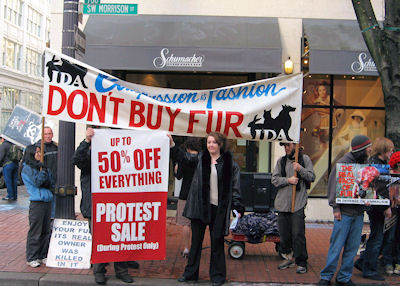
Bear in mind that companies being picketed can hit back by seeking an injunction from a court of law. An injunction can ban you from picketing in certain areas, limit the number of your picketers and put restrictions on their behaviour (like stopping them shouting abuse). A company might be more likely to win an injunction if picketers are intimidating, violent or in some other way overly anti-social. Animal rights activists set up a picket outside Oxford University's new unfinished multi-million pound animal experiment laboratory. The protesters were seen as noisy and violent by many and in 2004 the University won an injunction against them. The injunction imposed exclusion zones where demonstrating, picketing and loitering were legally banned: from around the building site and from around the property of contractors and the homes of people connected with the work. Picketing works, as Schumacher Furs found out. Examine the issues thoroughly and chose your target with care.
References (1) Local News. 29 November 2006. www.kgw.com. (Accessed March 2007.) (2) Former Schumacher Furs building in Portland undergoes extensive. Aaron Spencer, Sept. 2010. Daily Journal of Commerce, Portland, Oregon. (Accessed online March 2011.) (3) Schumacher Furs. www.schumacherfurs.com. (Accessed March 2011.) ›› To Entries & Home |
Free Illustrations
|