|
|
|

|
Chapter 2 Animal Ethics
Snappy Page Essence
Animal ethics is the systematic study of how we ought to treat animals and therefore is central to animal rights.
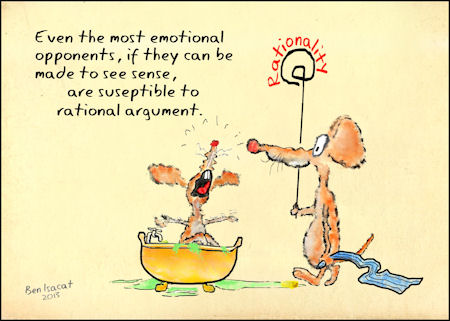
When you are active in animal rights you should know why you are being active and be able to defend your actions rationally. Simply being emotional about animals is not enough because the opposition may be equally emotional back at you, resulting in a stalemate. However, by stating your case rationally you can convince people of your cause and win converts. This is an important part of doing animal rights. Even the most emotional opponents, if they can be made to see sense, are susceptible to rational arguments. This entry sets out the rational background for animal rights so that you know where you are philosophically and have an idea of where you are going. Ethics If you methodically question the meaning and purpose of life you are a philosopher, whether amateur or professional. Ethics is the part of philosophy that asks how people should live their lives and how they should do good and right to each other. Animal ethics is the same but includes animals. Robert Garner in his book Animal Ethics says "Animal ethics seeks to examine beliefs that are held about the moral status of non-human animals." (2). You can define animal ethics more broadly, however, by saying that it is about acting for the moral good of animals (including humans) by understanding animal-human moral issues through knowledge and reasoning. Thus animal ethics is a practical pursuit as well as a cognitive study. Importance of Animal Ethics Our relationship with animals is based on beliefs we absorb from our upbringing and social customs. We accept these beliefs, often on trust from our elders, without challenging or analysing them. But unexamined beliefs when acted out can do enormous harm (Voltaire pointedly said, "If we believe absurdities we shall commit atrocities.") Everyone has some contact with animals directly or indirectly, whether farming or shooting animals, eating them, feeding their pets factory farmed animals, going to the zoo, using substances tested on animals or washing with animal-based soap. Yet most people do not realise the suffering and destruction humanity imposes on animals because it goes on largely out of sight and where it peaks above the surface it is tolerated as normal. Here is the point. The harm humans are doing to animals amounts to a holocaust that we must address (see the entry Animal Holocaust). If we are to make civilized progress we must comprehend what we are doing to animals and think about how we should be treating them. All of us must justify and defend our relations with animals in light of animal ethics. An ethical issue is when you think a harm or wrong is happening and something should be done about it. If we harm people then we must justify why we harm them and if we cannot justify our actions then we must not harm them. In the same way, with animal ethics we must critically question our conduct with animals. We must ask what we are doing to animals, why we are doing it, how should we and how can we do better - and take action. Key Concepts When thinking about animal ethics these key concepts are helpful.
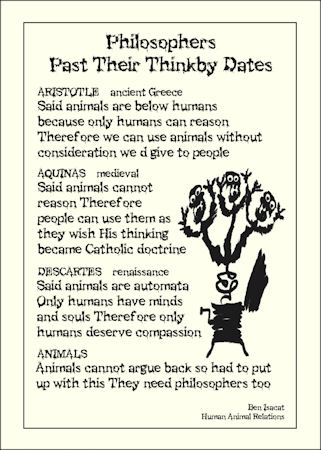
Some History That animals are made for human use is a traditional attitude, at any rate in western society, and held at least from Old Testament times up to Darwin (1809 - 1882). Aristotle (384 - 322 BC) thought animals exist to provide humans with food and other provisions; Aquinas (1225 - 1274) claimed that killing animals is acceptable and we can treat them in any way useful to us; and Descartes (1596 - 1650) asserted that animals are mindless robots which cannot suffer, the corollary being that we can do almost anything to them without thoughts of morality.
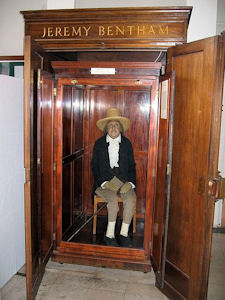
People have always had to emphasise differences between man and beast to maintain and defend their belief in human superiority. The rationally inclined assert that animals lack reason, intelligence, language and creativity. The spiritually inclined believe animals are not made in the 'image of God' and, although some of them appreciate and admire animals as God's creatures, many of them are largely unresponsive to animal misfortune and distress. Generally, people protect some animals, but only if the animals belong to people as property. Darwin, however, significantly helped begin the demolition of human centredness by convincingly arguing that animals and humans evolved from the same ancestors (although he did not dare write this overtly). Common evolutionary descent explains why humans share the same appearance as animals, especially with the apes. This shocked the Victorian public of Darwin's day but his evolutionary theory in outline is now widely accepted. Thus an ethical dilemma arose. Animals and humans are similar. So if humans have moral status then animals should have moral status too. For most of the history of western philosophy just about everyone passed off the moral status of animals as a trivial and insignificant question. However, since the 1970's an energetic debate has been waging about animal moral status, ignited by firebrand philosophers, such as Peter Singer (see the chapter Personalities). The animal moral status debate is founded on basic, common moral principles: it is wrong to cause suffering and it is wrong to discriminate against others by giving greater importance to your own group. Apply these principles consistently, says Singer, and they lead to the logical conclusion that we should morally treat animals like humans, provided the animals have relevant similarities with humans. Some animal oriented philosophers say the only important morally relevant similarity of animals with humans is that both can feel pain and suffer, that is that they are sentient. The writing of the great English philosopher Jeremy Bentham (1748 - 1832) is often quoted: "The day may come, when the rest of the animal creation may acquire the rights which never could have been withholden from them but by the hand of tyranny. ...the question is not, Can they reason? not, Can they talk? but, Can they suffer?" (3)
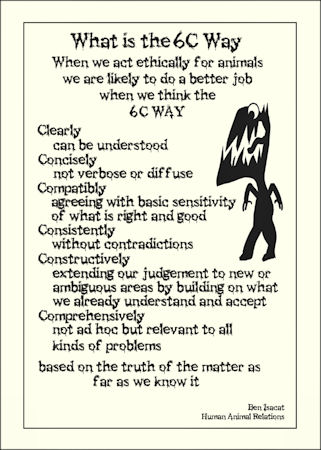
So we must distinguish the relevant similarities of animals and humans (eg sentiency) and not use inaccurate attributes to justify excluding animals from our moral consideration. Relevant similarities in moral terms boil down to basic requirements, such as the right to reproduce and pass on your genes, the right to liberty and the right to not to be forced to suffer for the gain of others (as in experimentation and farming). However, many people today still cannot accept animals on the same moral level as humanity, even while acknowledging the contributions of Darwin. But thanks to Singer and some fellow philosophers it is said that there is more controversy and discussion about animals today than during all past times combined. How to Proceed? When we make a judgement about the rights or wrongs of a situation our views and actions must be based on knowledge and reason. We must examine our thoughts and feelings carefully. We cannot rely completely on our intuition or feelings because people may be manipulating us for their own purpose without our realising it. We cannot rely on faith, religion, authority, the law, social standards, tradition, fashion, fantasy, immediate impression, emotional illogic, magic and many other reasons that are not necessarily rational. Reasons for acting ethically can be simple or complex, tempered by intuition or emotion, or whatever. But our reasons for acting ethically must be consistent, comprehensive and based on fact, that is on the truth of the matter as far as we know it. And our reasons for acting ethically must work the 6C Way.
Ethical Theories
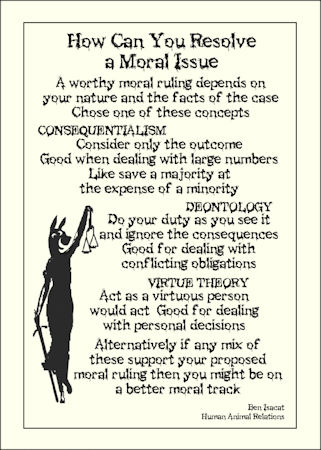
The three moral questions people ask and the ethical theories philosophers have worked out are
Consequentialism says you should act to bring about the best results or consequences. Consequentialism is goal-directed. It asserts that only the good outcome of your goal or action is important, not how you achieve your goal. You need not be dutiful or virtuous - you might even lie, cheat or whatever - so long as the result is morally good. Say you see a couple of sheep or pigs escape from a slaughterhouse and believe that taking them back to be killed is immoral, so you snatch and hide them and lie that you do not know where they are. Your action focuses on results, the saving of the animals from slaughter. You would believe the outcome is morally more important than stealing and lying. Consequentialism can also be called by the less cumbersome name of consequence ethics; its traditional name in philosophy is teleology, from the Greek teleos meaning end or purpose. 2. What am I required to do? Deontology states that you should do whatever is your duty, even if by doing it you harm yourself or others by suffering the consequences. For King and country, right or wrong, is a deontology dictum. Deontology counters consequentialism; doing what you consider is your obligation (duty) is more important than the outcome of your action. As a rancher you might hate shooting predators but accept that you have an obligation to protect your cattle regardless of your action's impact on wildlife. Or you might release laboratory animals waiting to be experimented on because you see your action as your duty to animalkind. (Alternatively you might condemn releasing laboratory animals because you believe your first duty is upholding the law and the standards of society as you see it - moral theories can work both ways!) You can also call deontology by the more descriptive term of duty ethics. 3. What should I do as a virtuous person? Virtue ethics claims that making good ethical decisions is based on being a virtuous person and holds that possessing admirable personal qualities - such as compassion, kindness, respect, toleration, honesty and courage - makes you virtuous. Thus, virtue ethics tries to bring in all the qualities of being human to influence your ethical considerations. Being a virtuous person you might, for instance, approve or reprove individuals or companies and support only those that do not harm animals or nature. Indeed, do these individuals or companies have virtuous qualities themselves? Do they advance or oppose virtue? Are they progressive, admirable and responsible or insensitive, negligent and dishonest? Virtue ethics, also called virtue theory or value theory, flourished in ancient Greece and Aristotle (BC 384 - 322) is often cited as its main philosophical representative. He argued that a virtue is the mean or middle path between two vices, like courage is midway between, and therefore better than, fearlessness or cowardice. Virtue ethics expired in the fourth century AD when moral theories purporting to be given by God supplanted it. However, the 20th century brought virtue ethics back to life and modernised it. Modern virtue ethics does not emphasise specific moral traits but says you should be virtuous in all aspects of your life and be a good person all the time. Ethical Theories Compared This table contrasts and highlights some main features of consequentialism, deontology and virtue ethics. Each theory focuses on a different attitude to morality, reveals a unique insight into moral problems and suggests a different way for resolving moral questions. Consequentialism, deontology and virtue ethics overlap with one another and they each come in several alternative versions (not shown here).
Choosing an Ethical Theory Which ethical theory (consequentialism, deontology or virtue ethics) should you follow to help you resolve an animal rights issue, or indeed any ethical matter? The answer may partly depend on your personality. You might be more concerned about the consequences of your action than be oriented to notions of doing your duty, or vice versa. Or you might be more concerned about being virtuous. Another suggestion commonly put forward for choosing which theory to follow is to use one that feels most natural for your particular set of circumstances. It might be useful to use:
Even if you favour one ethical theory over the others, keep in mind all three theories so that you are better aware of how ethical disagreements can arise, that is when one person advocates one ethical theory that clashes with someone else advocating another ethical theory. A foxhunter or bullfighter might defend their actions as a preservation of tradition; alternatively, you might claim that no one sympathetic to animals would kill foxes or bulls for sport. This can be seen as a case of deontology versus virtue ethics.
Do Philosophical Ideas Work? Generations of people acquire philosophical ideas and values without realising they are doing so and without knowing where their ideas and values come from. Many of our ideas and values originated from individuals who lived, thought and died before us, examples are John Lock and Karl Marx. Few things in human society are bigger than revolutions and revolutions are made of philosophical ideas. John Locke (1632 - 1704), English physician, public servant and philosopher, significantly helped lay the foundations of liberal society. In his lifetime his ideas about government, tyranny and the rights of man were pivotal in replacing the English monarch in the 'Glorious Revolution' of 1688. Even after his death Locke's ideas played a leading role guiding the American and French revolutions. The other pre-eminent thinker was a German emigre who settled in London and spent much of his time writing there at the British Library. Karl Marx (1818 - 1883) wrote the intellectual foundation of Communism that fuelled the Communist revolutions of Russia and China in the 20th century. Hundreds of millions of people today still live under the ideas of these two thinkers, ample demonstration of the power and pervasiveness of philosophical ideas. If you are not convinced, where might your ideas of soul and man's place in animal life come from? (Clue: Plato and Darwin. See the entries Soul and Darwin.) References (1) Singer, Peter. Applied Ethics. Oxford University Press: Oxford. 1986:226. (2) Garner, Robert. Animal Ethics. Polity Press. 2005:12. (3) Bentham, Jeremy. An Introduction to the Principles of Morals and Legislation. 1789, chapter xvii. Further Reading An excellent, very readable book, that includes animal rights and environmental ethics, is Noel Stewart, Ethics: an introduction to moral philosophy. Polity Press. 2009. For more ideas and thoughts be sure to read:
›› To Entries & Home |
Free Illustrations
|
||||||||||||||||||||||||||||||||||||||||||||||||||||||||||||||||||||